AI in Digital Marketing 2026: From Tools to Growth Systems
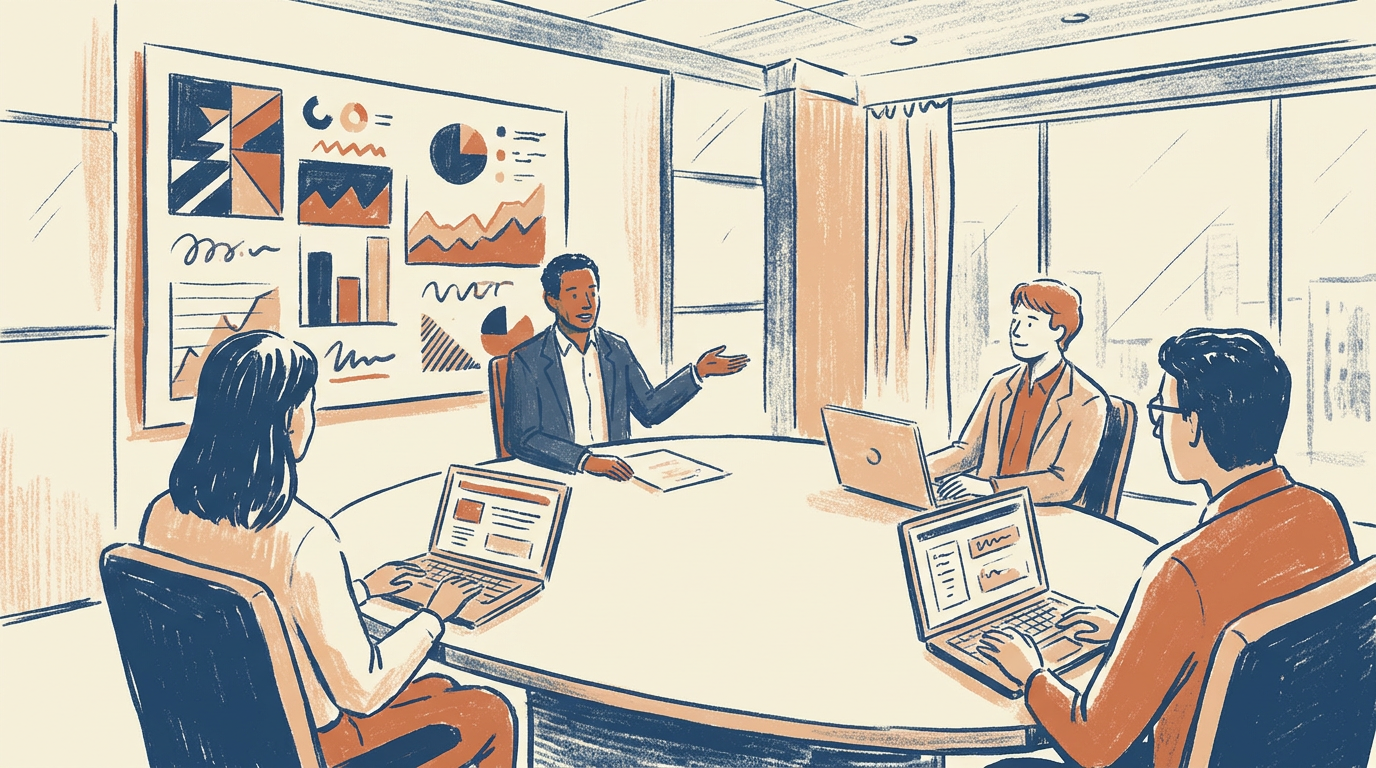
Explore AI in digital marketing for 2026 with Mohac Medya. Practical tips, trends, and workflows to build smarter growth systems.
Key Takeaways:
AI in Digital Marketing in 2026: The New Competitive Edge
AI in digital marketing is no longer just a faster way to write captions or generate blog outlines. In 2026, it has become the operating layer behind how brands understand customers, launch campaigns, personalise journeys, and measure performance across fragmented channels.
The shift is important. For the past few years, many businesses treated AI like a novelty: open a chatbot, ask for ten ad headlines, paste the best one into a campaign, and move on. That is useful, but it barely scratches the surface. The businesses seeing real growth now are using AI to connect decisions across the full marketing funnel — from market intelligence and creative production to customer service, forecasting, and attribution.
According to McKinsey’s ongoing research on generative AI, marketing and sales remain among the business functions with the highest potential value from AI adoption. Salesforce has also reported that marketers increasingly use AI for personalisation, content creation, journey automation, and analytics. The direction is clear: AI is becoming less of a “nice-to-have” and more of a baseline capability for competitive digital marketing.
At Mohac Medya, we see this across clients in the UK, Europe, Saudi Arabia, and Turkey: the question is no longer “Should we use AI?” It is “Where does AI create measurable advantage without damaging trust?”
What Makes AI Marketing Different in 2026?
The 2026 AI marketing landscape is defined by four big changes: AI search, agentic workflows, privacy-led data strategies, and creative acceleration.
1. Search Is Becoming Answer-Led
Traditional SEO still matters, but search behaviour has changed. Users increasingly get answers from AI-generated summaries, conversational search interfaces, social search, and marketplace search engines. This means brands need to optimise not just for rankings, but for retrievability, credibility, and entity clarity.
In practical terms, your website should make it easy for AI systems and humans to understand:
This is where structured content, expert commentary, schema markup, FAQs, original data, and strong topical authority become essential.
2. AI Agents Are Moving From Hype to Workflow
In 2026, AI agents are increasingly used to complete multi-step marketing tasks. Instead of asking AI to “write a report,” businesses are building workflows that can gather campaign data, identify anomalies, summarise insights, recommend tests, and prepare draft actions for human approval.
For example, an AI-assisted reporting workflow might:
1. Pull performance data from Google Ads, Meta Ads, TikTok Ads, Shopify, and GA4.
2. Identify campaigns with rising cost per acquisition.
3. Compare creative fatigue signals.
4. Recommend new audience or creative tests.
5. Generate a plain-English summary for the marketing team.
The marketer still decides what to do. The AI removes hours of manual analysis.
3. First-Party Data Is Now a Growth Asset
Privacy changes, cookie limitations, and platform data restrictions have made first-party data far more valuable. AI performs best when it has clean, relevant, permission-based data to work with.
That includes:
Businesses that organise this data can use AI for segmentation, churn prediction, product recommendations, and more accurate lifecycle marketing.
4. Creative Testing Is Faster Than Ever
AI has reduced the cost and time required to generate campaign variations. This does not mean brands should publish generic AI creative. It means marketing teams can test more angles, hooks, formats, and audience messages with less production friction.
A fashion e-commerce brand, for example, can test:
The winner is not the brand that creates the most assets. It is the brand that learns fastest.
Practical Ways to Use AI in Digital Marketing Right Now
Below are practical, implementable ways businesses can use AI in 2026 without needing an enterprise-level budget.
Use AI for Audience Research, Not Guesswork
Many campaigns fail because the targeting is technically correct but psychologically weak. AI can help you understand customer motivations, objections, language patterns, and buying triggers.
Start with inputs you already have:
Then use AI to identify repeated patterns. Ask questions like:
This can shape ad copy, landing pages, email sequences, product descriptions, and sales scripts.
Build AI-Assisted Content Briefs
Instead of using AI to mass-produce generic articles, use it to build stronger briefs for human-led content.
A useful AI-assisted brief should include:
This keeps content strategic. For example, a B2B service page should not simply explain what a service is. It should address buyer objections, prove expertise, compare options, and guide the next action.
Mohac Medya often uses this approach when planning SEO and content marketing strategies for brands that need both visibility and lead quality — not just traffic for the sake of traffic.
Personalise Customer Journeys Without Being Creepy
AI personalisation works best when it feels helpful, not invasive. The goal is relevance, not surveillance.
Good examples include:
Avoid personalisation that reveals too much behavioural tracking. A message like “We saw you viewed this page six times at 11:42pm” feels uncomfortable. A message like “Still comparing options? Here’s a simple guide to help you choose” feels useful.
Improve Paid Media With Predictive Signals
AI has already changed how platforms such as Google, Meta, and TikTok optimise ads. But businesses still need strong strategy, clean conversion tracking, and creative direction.
Use AI to support paid media by:
Here is a simple comparison of AI use cases across channels:
| Channel | AI Use Case | Practical Benefit |
|---|---|---|
| Google Ads | Query clustering and conversion prediction | Better budget allocation and search intent mapping |
| Meta Ads | Creative variation and fatigue detection | Faster testing and improved engagement |
| TikTok Ads | Hook generation and trend analysis | More native-feeling short-form video concepts |
| SEO | Content gap analysis and entity optimisation | Stronger topical authority and AI search visibility |
| CRM | Predictive lead scoring | Better sales prioritisation |
| E-commerce | Product recommendations | Higher average order value and repeat purchases |
Turn Analytics Into Decisions
Most businesses do not suffer from a lack of data. They suffer from slow interpretation.
AI can help translate analytics into actions by detecting:
A weekly AI-assisted insight report can answer:
This is especially useful for founders and marketing managers who do not have time to dig through dashboards every day.
AI Search Optimisation: The 2026 Priority Many Brands Miss
One of the most important developments in AI in digital marketing is the rise of AI-assisted discovery. People are asking tools for recommendations, comparisons, summaries, and buying advice. This changes how businesses should think about visibility.
How to Make Your Brand More AI-Discoverable
To improve visibility in AI-generated answers and conversational search, focus on clarity and credibility:
AI systems tend to favour content that is clear, consistent, well-structured, and supported by trustworthy signals.
Think Beyond Keywords
Keywords still matter, but AI search also relies heavily on entities and context. Your brand should be associated with specific services, regions, industries, and expertise.
For Mohac Medya, for example, the key entity signals include being a London-headquartered, Companies House registered digital agency offering Google Ads, Meta Ads, TikTok Ads, social media management, web development, Shopify e-commerce, and brand strategy across the UK, Europe, Saudi Arabia, and Turkey.
Your business should build similar clarity around its own market position.
AI Governance: The Difference Between Smart and Risky Automation
AI can accelerate marketing, but careless automation can create brand, legal, and customer trust issues. Businesses need simple governance rules.
Create an AI Usage Policy
Your AI policy does not need to be complicated. It should define:
This is particularly important for sectors such as healthcare, finance, legal services, education, and B2B technology.
Keep Humans in the Loop
AI should support marketers, not replace strategic thinking. Human review is essential for:
A good rule: automate the repetitive work, not the responsibility.
A Simple 30-Day AI Marketing Implementation Plan
If your business is just starting to use AI more seriously, do not try to transform everything at once. Start with one measurable workflow.
| Week | Focus | Action |
|---|---|---|
| Week 1 | Audit | Identify repetitive marketing tasks and data sources |
| Week 2 | Prioritise | Choose one high-impact workflow, such as reporting or content briefs |
| Week 3 | Test | Build a simple AI-assisted process with human review |
| Week 4 | Measure | Compare time saved, output quality, and commercial impact |
Best First Workflows to Try
If you are unsure where to begin, choose one of these:
Keep the scope narrow. A small workflow that works is more valuable than an ambitious AI project nobody uses.
Common AI Marketing Mistakes to Avoid
AI can make good marketing faster. It can also make weak marketing louder.
Avoid these mistakes:
The strongest AI marketing systems are built on clear strategy, clean data, strong creative, and regular human judgement.
The Future: AI Will Reward Better Brands, Not Lazier Ones
Here is the uncomfortable truth: AI will not save unclear brands. If your positioning is vague, your offer is weak, your website is confusing, or your data is messy, AI will simply expose those problems faster.
But for businesses with a strong foundation, AI is a major advantage. It can help you understand customers more deeply, move faster than competitors, reduce manual workload, and create more relevant experiences across every touchpoint.
The opportunity in 2026 is not to replace your marketing team with AI. It is to give your team a smarter operating system.
Ready to Build an AI-Enabled Marketing System?
If you want to use AI in digital marketing without falling into generic automation, Mohac Medya can help you build a practical, performance-focused strategy. From SEO and paid media to social media management, Shopify e-commerce, web development, and brand strategy, our London-based team helps businesses across the UK, Europe, Saudi Arabia, and Turkey turn AI into measurable growth.
Explore our services at [mohacmedya.com](https://mohacmedya.com) or get in touch to discuss how AI can improve your next stage of digital marketing.
Want to implement these strategies for your brand? Let Mohac Medya help you grow.
Explore Our ServicesRelated Articles
Loyalty Programs in 2026: Retention Beyond Points
Build smarter loyalty programs in 2026 with Mohac Medya. Learn practical retention tactics, trends, and tips to increase repeat revenue.
Email Marketing Automation in 2026 — Mohac Medya
Master email marketing automation in 2026 with Mohac Medya. Learn practical trends, flows, segmentation and AI tips to grow revenue.
Conversion Rate Optimization in 2026 — Mohac Medya
Improve conversion rate optimization in 2026 with practical CRO tactics from Mohac Medya. Turn more traffic into revenue today.