
Social Media ·
Influencer Marketing and UGC in 2026 — Mohac Medya
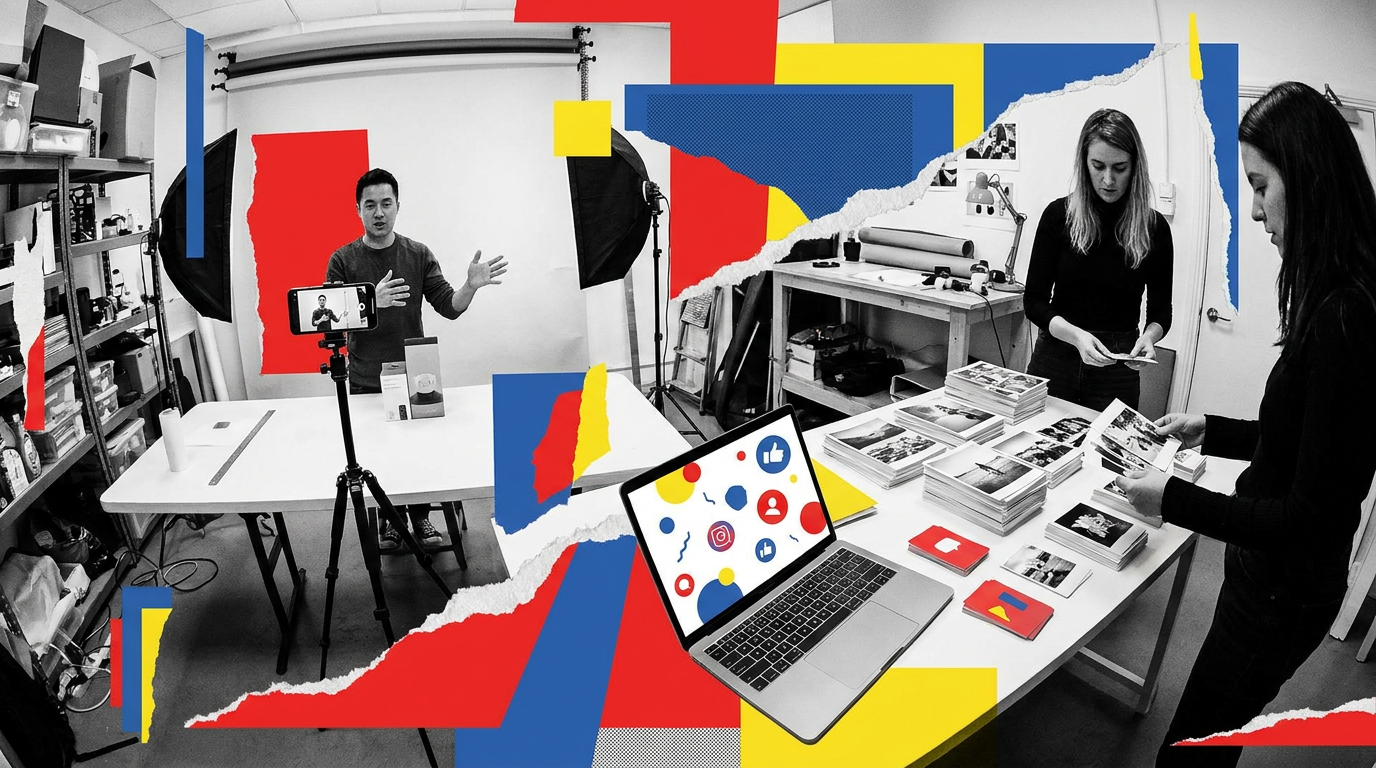
Explore influencer marketing and UGC trends for 2026 with Mohac Medya. Get practical tips to build trust, content and sales.
Key Takeaways:
- Influencer marketing and UGC in 2026 is less about fame and more about proof: brands are shifting budgets toward creators who can demonstrate trust, niche relevance and measurable conversion impact.
- UGC is becoming a performance asset: it now fuels paid ads, product pages, email, social commerce and marketplace listings — not just organic social feeds.
- AI is changing creator discovery, briefs and editing, but authenticity still wins: audiences can spot overproduced content quickly, especially on TikTok, Reels and Shorts.
- The best campaigns use a creator operating system: clear rights, testing frameworks, content libraries, creator whitelisting and first-party performance data.
Influencer marketing and UGC have grown up. In 2026, the smartest brands are no longer asking, “Which influencer has the biggest following?” They are asking, “Which creator can make our product feel believable, useful and worth buying?”
That shift matters because consumer trust is fragile. According to Edelman’s Trust Barometer research, people continue to trust “people like me” and subject-matter experts more than traditional brand messaging. Meanwhile, creator-led social commerce keeps expanding as platforms push shoppable video, live selling, affiliate tools and in-app checkout experiences.
For businesses in the UK, Europe, Saudi Arabia and Turkey, this creates a major opportunity: stop treating creators as one-off awareness partners and start building a repeatable UGC engine that improves paid media, conversion rates and brand credibility. At Mohac Medya, we see the strongest results when influencer marketing, paid social and content strategy work together — not in separate silos.
Influencer Marketing and UGC in 2026: What Changed?
The creator economy has moved from “sponsored post” culture to content infrastructure. Brands need a steady pipeline of authentic videos, product demos, reviews, tutorials, founder stories and customer-style content that can be used across multiple channels.
Three big changes define 2026.
1. Micro and niche creators are outperforming celebrity reach
Large influencers still have value, especially for launches and cultural moments. But for many growth-focused brands, micro creators and nano influencers are more practical because they often deliver stronger engagement, lower costs and more targeted trust.
Industry studies from Influencer Marketing Hub have repeatedly shown that influencer marketing generates strong average ROI, with many brands reporting returns around $5+ for every $1 spent, though outcomes vary heavily by strategy, category and execution. The key is not simply hiring creators — it is testing the right creator-message-offer combinations.
2. UGC is now a paid media requirement
Static brand ads are struggling in crowded feeds. Meta, TikTok and YouTube Shorts reward fast, native-feeling creative. That is why UGC-style ads — customer testimonials, “three reasons why” videos, unboxings and problem-solution demos — often outperform polished brand campaigns.
A 2025 Bazaarvoice shopper research trend also reinforced what marketers already see daily: reviews, customer photos and social proof strongly influence purchase decisions. In 2026, UGC is essentially conversion evidence.
3. AI has raised the creative volume — and the authenticity bar
AI tools can generate briefs, captions, thumbnails, translations, subtitles, video variations and performance insights. But the market is now flooded with synthetic-looking content. Audiences are becoming more sensitive to “fake realness.”
The winning approach is not to replace creators with AI. It is to use AI to speed up workflow while keeping human experience at the centre.
Influencer vs UGC Creator: Know the Difference
Businesses often confuse influencer marketing and UGC creation. They overlap, but they are not the same.
| Type | Main Value | Best For | Typical Payment Model |
|---|---|---|---|
| Influencer | Distribution through their audience | Awareness, trust, launch buzz, community reach | Fee per post, affiliate, commission, hybrid |
| UGC Creator | Content production for brand channels | Paid ads, product pages, email, organic social | Fee per asset, bundle, retainer |
| Creator Affiliate | Content plus performance incentive | Sales, measurable ROI, ambassador programmes | Commission, gifted product, bonus tiers |
| Expert Creator | Credibility and education | B2B, health, finance, tech, premium products | Higher fee, licensing, long-term partnership |
A skincare brand may hire an influencer to reach 80,000 beauty followers, while also hiring five UGC creators to produce 25 ad variations for Meta and TikTok. Both are useful, but they serve different parts of the funnel.
The 2026 Creator Strategy: Build a UGC Engine, Not a Campaign
A one-off influencer post may produce a spike. A UGC engine compounds over time.
Here is the practical framework we recommend at Mohac Medya.
Step 1: Define the content job before choosing creators
Do not start with creator names. Start with the business problem.
Ask:
- Do we need more awareness in a new market?
- Do we need product education?
- Do we need stronger ad creative for Meta or TikTok?
- Do we need customer proof on Shopify product pages?
- Do we need localised content for the UK, Saudi Arabia, Turkey or Europe?
A creator brief for awareness should look different from a brief for conversion. Awareness content may focus on lifestyle, relatability and storytelling. Conversion content should focus on objections, benefits, demonstrations and proof.
Step 2: Recruit for audience fit, not vanity metrics
Follower count is a weak signal on its own. Look at:
- Comment quality: Are people asking real questions or just posting emojis?
- Audience location: Are they actually in your target market?
- Content consistency: Does the creator have a repeatable style?
- Category credibility: Have they built trust in your niche?
- Past sponsored content: Does it feel natural or forced?
- Video retention indicators: Are hooks strong? Do people watch to the end?
For e-commerce, a creator with 7,000 highly engaged followers in Manchester, Riyadh or Istanbul may outperform a general lifestyle account with 150,000 passive followers.
Step 3: Write briefs that guide, not suffocate
The fastest way to kill UGC is to over-script it. Creators understand native platform language better than most brand teams.
A strong brief includes:
- Product facts and must-say claims
- Target customer and pain points
- Content objective
- Key objections to overcome
- Do-not-say compliance notes
- Example hooks
- Required format and length
- Usage rights and paid media permissions
A weak brief says: “Make it go viral.”
Instead, give creators creative lanes:
- “Show the first 10 seconds of using the product.”
- “Compare life before and after the product.”
- “Answer the biggest hesitation customers have.”
- “Film this as if you are sending advice to a friend.”
UGC Formats That Are Working in 2026
Not all UGC performs equally. The best format depends on your product, price point and buying journey.
| Format | Why It Works | Best Use Case |
|---|---|---|
| Problem-solution demo | Makes value instantly clear | Beauty, home, fitness, SaaS, apps |
| Founder plus creator duet | Adds human trust and brand story | Startups, premium products, mission-led brands |
| “I tried it for 7 days” | Builds narrative and proof | Wellness, skincare, productivity tools |
| Objection handling | Reduces purchase friction | High-ticket, subscriptions, B2B services |
| Street-style reviews | Feels spontaneous and social | Fashion, food, local services |
| Unboxing with first reaction | Creates anticipation | E-commerce, gifting, consumer goods |
| Expert explainer | Adds authority | Finance, health, education, technology |
In 2026, the strongest UGC often feels specific. “This helped my dry skin” is weaker than “This stopped my foundation separating after my commute on the Central line.” Specificity creates believability.
How to Use UGC Beyond Social Media
Many businesses underuse creator content. A good UGC asset should not live once on Instagram and disappear.
Repurpose it across:
Paid social ads
Use UGC in Meta Ads, TikTok Ads and YouTube Shorts campaigns. Test different hooks, creators and calls to action. A simple structure works well:
- Hook: “I didn’t expect this to work…”
- Problem: “My issue was…”
- Demo: “Here’s how I used it…”
- Proof: “After a week…”
- CTA: “You can get it here…”
If you need help turning creator assets into scalable ad campaigns, explore Mohac Medya’s paid media services at mohacmedya.com.
Product pages
Add short UGC clips near product descriptions, size guides, FAQs and reviews. This is especially valuable for Shopify e-commerce stores because it reduces uncertainty.
Email and SMS
Use creator testimonials in abandoned cart flows, launch emails and post-purchase sequences. A real customer-style clip can feel more persuasive than another discount code.
Landing pages
For service businesses, embed expert creator clips or client-style testimonial videos above the fold. Human faces increase trust quickly.
Sales enablement
B2B companies can use influencer-style expert content in pitch decks, LinkedIn outreach and webinar promotions.
Measurement: What to Track in 2026
Influencer marketing measurement has matured. Likes are not enough.
Track metrics by funnel stage:
| Funnel Stage | Metrics to Track | Practical Tooling |
|---|---|---|
| Awareness | Reach, impressions, video views, audience growth | Platform analytics, creator reports |
| Engagement | Saves, shares, comments, watch time | TikTok, Instagram, YouTube analytics |
| Consideration | Link clicks, landing page views, email sign-ups | UTMs, GA4, pixels |
| Conversion | Sales, CPA, ROAS, affiliate revenue | Shopify, ad platforms, affiliate tools |
| Creative Quality | Hook rate, hold rate, thumb-stop ratio | Paid social dashboards, creative testing |
Use unique discount codes, UTM links and creator landing pages where possible. For paid amplification, compare creator assets against brand-made ads using the same audience and budget.
At Mohac Medya, we often recommend testing at least 10–20 creative variations before making big conclusions. One creator video failing does not mean UGC fails. It may mean the hook, offer, angle or landing page needs work.
Legal and Brand Safety Essentials
As influencer marketing becomes more regulated, brands must be careful.
In the UK, creators must clearly disclose paid partnerships using terms such as #ad or platform partnership labels. Similar disclosure expectations exist across the EU, and businesses operating in Saudi Arabia or Turkey should also check local advertising rules and influencer licensing requirements.
Your creator agreements should cover:
- Content deliverables
- Approval process
- Posting dates
- Usage rights duration
- Paid ad whitelisting permissions
- Exclusivity terms
- Music and asset licensing
- Disclosure requirements
- Payment terms
- AI editing or synthetic content usage
Do not rely on casual DMs for serious campaigns. A proper contract protects both the brand and the creator.
Practical Tips Businesses Can Implement This Month
If you want to make influencer marketing and UGC work in 2026, start small but structured.
1. Build a creator shortlist
Create a spreadsheet with 30–50 potential creators. Include niche, location, follower count, average views, engagement quality, email, rates and content notes.
2. Send product to the right people, not everyone
Gifted campaigns still work, but only when targeted. Prioritise creators who already talk about your category.
3. Create a monthly UGC testing budget
Even a modest budget can produce useful content. For example:
- 5 creators
- 3 videos each
- 15 total assets
- 3 hooks per winning concept
- Test through Meta or TikTok Ads
4. Negotiate usage rights upfront
If you plan to use content in ads, emails or landing pages, agree this before production. Paid media rights usually cost more, but they are worth it.
5. Localise creator content
A London audience, Riyadh audience and Istanbul audience may respond to different references, language choices, cultural cues and purchase objections. Local creators make campaigns feel native.
6. Turn customers into creators
Your happiest customers may be your best UGC source. Add post-purchase prompts:
- “Show us how you use it.”
- “Share your before and after.”
- “Record your honest first reaction.”
- “Tell us what surprised you most.”
Offer loyalty points, discount vouchers or affiliate commission in return.
Common Mistakes to Avoid
Many brands waste influencer budgets because they repeat the same mistakes.
- Choosing creators only because they look premium
- Ignoring audience location and demographics
- Over-scripting content until it feels like an advert
- Failing to secure usage rights
- Measuring only likes and comments
- Not testing UGC in paid ads
- Sending creators to weak landing pages
- Expecting one post to transform revenue overnight
Creator marketing is powerful, but it works best as a system.
Final Thoughts: Trust Is the New Creative Advantage
In 2026, influencer marketing and UGC are not side projects for trendy brands. They are core trust-building tools for businesses that need attention, credibility and conversions in crowded markets.
The brands that win will not necessarily hire the biggest names. They will build strong creator relationships, test content intelligently, repurpose assets across the customer journey and measure what actually drives growth.
Ready to Build a Creator-Led Growth System?
Mohac Medya is a London-headquartered, Companies House registered digital agency helping brands across the UK, Europe, Saudi Arabia and Turkey grow through social media management, Meta Ads, TikTok Ads, Google Ads, Shopify e-commerce, web development and brand strategy.
If you want to turn influencer marketing and UGC into a measurable growth channel, visit mohacmedya.com and explore how our team can help you plan, produce and scale creator-led campaigns.