
Digital Marketing ·
Digital Marketing Trends 2026: Growth OS — Mohac Medya
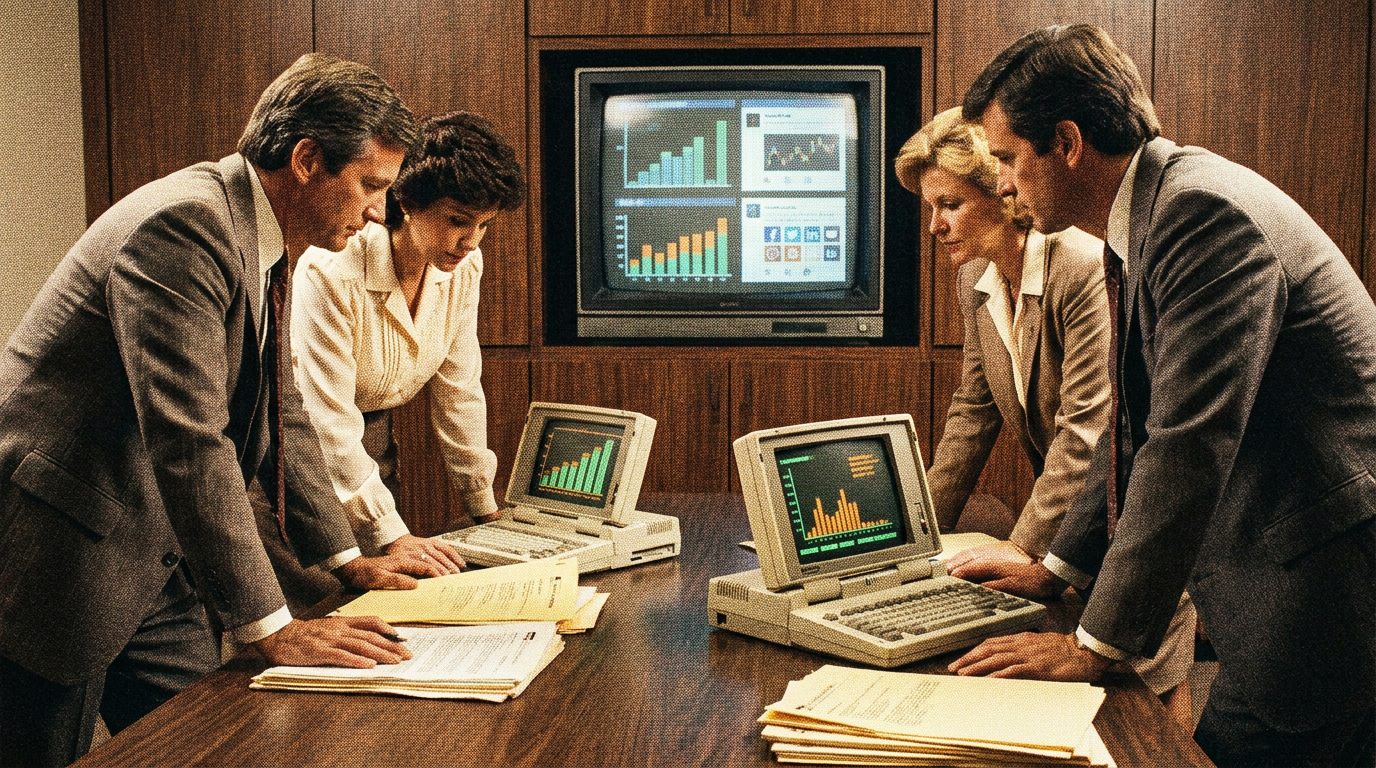
Explore digital marketing trends 2026 with Mohac Medya. Get practical predictions and tactics to build a smarter growth system today.
Key Takeaways:
- Digital marketing trends 2026 are less about isolated channels and more about building a connected growth operating system across data, content, media, and measurement.
- AI assistants, zero-click discovery, retail media, privacy-first data, and community-led growth are reshaping how customers find, compare, and buy.
- Businesses should stop chasing every new platform and instead build repeatable systems: first-party data capture, modular content, incrementality testing, and faster creative production.
- The brands that win in 2026 will be the ones that combine automation with human judgment, not the ones that automate everything blindly.
Digital marketing trends 2026 are not just “more AI, more video, more automation.” That is the lazy version. The sharper prediction is this: marketing is becoming a growth operating system where every touchpoint — search, social, paid media, website, marketplace, WhatsApp, CRM, and in-store data — needs to talk to the others.
At Mohac Medya, working with brands across the UK, Europe, Saudi Arabia, and Turkey, we are seeing the same pattern in different markets: businesses are not short of tools. They are short of connected decision-making. In 2026, the winners will be the companies that turn fragmented marketing activity into one intelligent commercial engine.
Below are the digital marketing predictions that actually matter — and the practical steps businesses can implement now.
Digital Marketing Trends 2026: From Campaigns to Growth Systems
For years, marketing teams planned in campaigns: launch, spend, report, repeat. In 2026, that model is too slow. Customer journeys now move across AI search summaries, TikTok comments, comparison sites, Reddit threads, retail media placements, WhatsApp messages, and brand websites before a purchase ever happens.
The new question is not, “Which campaign should we run?” It is: what system helps us learn faster than competitors?
What a growth operating system includes
| Layer | What it does | 2026 priority |
|---|---|---|
| Data layer | Captures customer, product, and engagement signals | First-party and consented data |
| Content layer | Produces reusable assets for every channel | Modular content, not one-off posts |
| Media layer | Distributes demand across paid, organic, and partner channels | Budget flexibility |
| Conversion layer | Turns attention into revenue | Landing pages, offers, checkout flows |
| Measurement layer | Shows what actually drives incremental growth | Incrementality and blended reporting |
Practical tip: Audit your marketing stack by asking: “Where does this data go next?” If your ad data, website analytics, social insights, and sales information live in separate silos, your first 2026 project should be integration — not another campaign.
1. AI Assistants Become the New Discovery Gatekeepers
AI-powered discovery is no longer theoretical. Google’s AI experiences, ChatGPT-style assistants, Perplexity-style answer engines, and in-platform social search are changing how people research products and services.
Gartner famously predicted that traditional search engine volume could drop by 25% by 2026 due to AI chatbots and virtual agents. Whether the exact number lands perfectly or not, the direction is obvious: more customers will ask AI systems for recommendations before they ever visit a website.
This creates a new challenge: if AI tools summarize the market, will your brand be included?
How businesses can adapt
- Build clear, structured service pages that explain who you help, what you offer, pricing signals, locations, FAQs, and proof points.
- Publish comparison-friendly content such as “best option for,” “how to choose,” “cost of,” and “questions to ask before hiring.”
- Keep your brand information consistent across your website, Google Business Profile, social platforms, directories, and third-party mentions.
- Add expert commentary and original insights. AI systems are more likely to surface content that offers something beyond rewritten basics.
This is not just SEO. It is AI visibility optimisation — making your brand understandable to both humans and machines.
2. Zero-Click Marketing Becomes a Revenue Skill
The old funnel assumed people clicked through to your website. In 2026, many people will make decisions before they click anything. They may read LinkedIn carousels, watch TikTok reviews, compare Reddit opinions, scan Google AI summaries, or ask a WhatsApp group.
Zero-click does not mean zero value. It means your marketing has to deliver trust, proof, and clarity inside the platform where attention already exists.
What to do now
Create “complete micro-assets” that answer one commercial question without forcing the user to leave immediately:
- A 30-second explainer video answering a buying objection
- A LinkedIn post breaking down a common cost mistake
- A carousel comparing service packages
- A short case-study graphic with measurable results
- A pinned FAQ comment under high-performing social content
The goal is to make every asset useful on its own while still giving motivated prospects a reason to visit your website.
3. Retail Media Expands Beyond Big E-Commerce Brands
Retail media — ads placed within retailer, marketplace, and commerce environments — is one of the fastest-growing advertising categories globally. GroupM has projected retail media to account for a major share of digital ad growth, with global investment moving well beyond Amazon into supermarkets, delivery apps, marketplaces, and niche commerce platforms.
In 2026, retail media will not only matter to consumer packaged goods giants. It will affect beauty brands, local food companies, electronics sellers, fashion labels, homeware businesses, and B2B suppliers that sell through distributors.
Why it matters
Retail media is powerful because it sits close to purchase intent. A user browsing a category page or marketplace search result is not passively scrolling — they are comparing options.
| Channel type | Intent level | Best use case |
|---|---|---|
| Social ads | Low to medium | Creating demand |
| Search ads | Medium to high | Capturing demand |
| Retail media | High | Converting category shoppers |
| Organic content | Varies | Building trust and education |
Practical tip: If your products are sold through marketplaces or retail partners, ask what advertising, sponsored listing, or data-sharing opportunities they offer. Even a small test budget can reveal which products have the strongest conversion signals.
4. Measurement Moves from Attribution to Incrementality
Attribution has always been a bit of a comforting illusion. It gives a tidy answer to a messy question: “Which channel caused the sale?” But in a privacy-first environment, with cookie restrictions, app tracking limits, and cross-device behaviour, last-click attribution is increasingly unreliable.
In 2026, serious businesses will focus more on incrementality: what revenue happened because of marketing that would not have happened otherwise?
Better measurement habits for 2026
- Run geo tests by increasing spend in one region while holding another steady.
- Compare new customer acquisition against returning customer revenue.
- Track blended metrics such as MER, CAC, LTV, conversion rate, and contribution margin.
- Use platform attribution as a directional signal, not the final truth.
- Review performance weekly, but judge strategy over longer commercial cycles.
Mohac Medya often advises clients to pair platform reporting with business-level numbers. If Meta, Google, TikTok, and your CRM all claim credit for the same sale, your dashboard is not lying — it is just incomplete.
5. Creative Velocity Beats Media Tweaking
One of the strongest digital marketing predictions for 2026 is that creative output will become a bigger performance lever than small targeting adjustments.
Ad platforms are increasingly automated. Bidding, placements, lookalike modelling, and audience expansion are handled by machine learning. That means human advantage shifts toward message quality, offer clarity, storytelling, and creative testing.
A practical creative testing framework
Instead of producing random content, test creative variables systematically:
| Variable | Example tests |
|---|---|
| Hook | Problem-led vs outcome-led opening |
| Format | Founder video vs animation vs product demo |
| Proof | Testimonial vs statistic vs before/after |
| Offer | Free consultation vs bundle vs limited-time bonus |
| Audience angle | Beginner buyer vs expert buyer vs price-sensitive buyer |
Practical tip: Build a monthly “creative sprint.” Produce 10–20 lightweight variations around one offer, then analyse which hooks, formats, and objections produce the best engagement and conversion quality.
6. Communities Become Research Labs, Not Just Audiences
Community-led marketing in 2026 is not simply about running a Facebook Group or Discord server. It is about listening to real customer language and using that insight across your website, ads, sales scripts, product pages, and content strategy.
Your customers are already telling you what they care about. They are doing it in:
- Comment sections
- Reviews
- Support tickets
- Reddit threads
- WhatsApp groups
- Sales calls
- Live chat transcripts
- Marketplace Q&A sections
The smartest marketers will mine these conversations for exact phrases, objections, emotional triggers, and unmet needs.
Simple community intelligence process
- Collect 50 real customer comments or questions each month.
- Group them into themes: price, trust, speed, quality, comparison, risk.
- Turn each theme into content, landing page copy, FAQs, or ad angles.
- Feed the best-performing language back into sales and customer service.
This is especially powerful for multilingual markets. A phrase that converts in London may not carry the same emotional weight in Istanbul, Riyadh, or Berlin. Mohac Medya’s cross-market experience shows that localisation is not translation — it is cultural interpretation.
7. Privacy-First Personalisation Becomes the Standard
Customers still expect relevance, but they are more aware of how their data is used. The brands that thrive in 2026 will not be the ones that collect the most data. They will be the ones that earn the right to use it.
That means clear consent, useful value exchanges, and respectful personalisation.
What ethical personalisation looks like
- Asking users what they want to receive instead of assuming
- Offering preference centres, not just unsubscribe links
- Using quizzes, calculators, and guided forms to collect useful intent data
- Explaining why you ask for information
- Avoiding creepy over-personalisation that makes customers uncomfortable
For example, a property company could ask users whether they are buying, renting, investing, or relocating — then tailor follow-up content accordingly. That is helpful. Following them around the internet with the same generic banner for 30 days is not.
8. The Website Becomes the Decision Hub Again
Despite all the attention on platforms, your website still matters deeply in 2026. The difference is that it can no longer be a static brochure. It must act as the decision hub for prospects arriving from fragmented discovery journeys.
A modern website should answer:
- What do you do?
- Who is it for?
- Why should someone trust you?
- What results can you prove?
- What happens next?
- How quickly can someone take action?
Your social content may create the spark, but your website usually closes the confidence gap.
Practical tip: Review your top five landing pages and remove ambiguity. Add clearer proof, stronger calls to action, faster page speed, better mobile layouts, and FAQs based on real sales objections.
What Businesses Should Prioritise in the Next 90 Days
If you are overwhelmed by all these digital marketing trends, start small. Here is a practical 90-day roadmap.
| Timeline | Action | Outcome |
|---|---|---|
| Days 1–15 | Audit data, analytics, and conversion tracking | Identify blind spots |
| Days 16–30 | Update core website pages for AI and human clarity | Improve discoverability and trust |
| Days 31–45 | Build a modular content bank | Increase creative velocity |
| Days 46–60 | Launch one incrementality or geo test | Improve measurement quality |
| Days 61–75 | Analyse customer language from reviews and sales calls | Sharpen messaging |
| Days 76–90 | Reallocate budget based on business-level performance | Scale what actually works |
The point is not to do everything. The point is to build a smarter operating rhythm.
Final Prediction: The Best Marketers Will Become System Designers
The most important digital marketing trend for 2026 is not a platform. It is a mindset shift.
Marketers are becoming system designers. They need to understand data, psychology, automation, creative production, commercial strategy, and customer experience. The future belongs to teams that can connect the dots faster than their competitors.
AI will make average marketing easier to produce. That means average marketing will become invisible. Distinctive thinking, sharper positioning, better customer insight, and faster execution will matter more than ever.
Build Your 2026 Growth System with Mohac Medya
If your marketing feels busy but disconnected, now is the time to rebuild it around clarity, performance, and scalable systems.
Mohac Medya is a London-headquartered, Companies House registered digital agency helping businesses across the UK, Europe, Saudi Arabia, and Turkey with Google Ads, Meta Ads, TikTok Ads, social media management, web development, Shopify e-commerce, and brand strategy.
Explore our services at mohacmedya.com and let’s build a digital marketing system ready for 2026 — not one stuck in 2022.