
Digital Marketing ·
Digital Marketing Trends 2026: Predictions for Growth
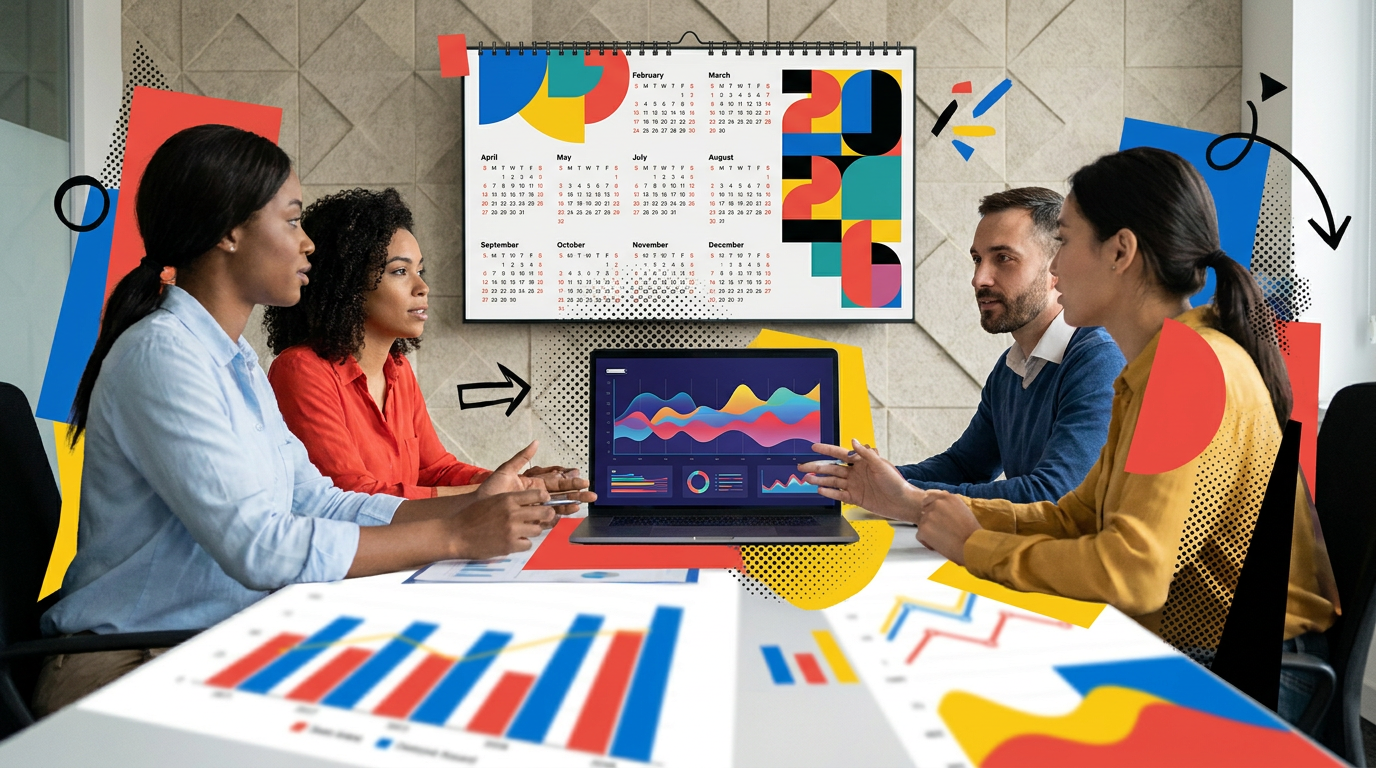
Explore digital marketing trends 2026 with Mohac Medya: AI agents, privacy-first data, retail media and practical steps to grow smarter.
Key Takeaways:
- Digital marketing trends 2026 are being shaped by AI agents, privacy-safe data, search fragmentation and commerce-led advertising.
- The biggest advantage will not come from adopting every new tool, but from building connected systems: data, creative, media and measurement working together.
- Businesses should prioritise first-party data, AI-assisted workflows, retail media testing, and clearer brand differentiation.
- Practical implementation matters: start with small pilots, define measurement rules, and scale what proves incremental value.
Digital Marketing Trends 2026: The Shift From Channels to Systems
The most important digital marketing trends 2026 are not just “more AI” or “more video”. Those headlines are too easy. The real shift is that marketing is moving from channel-by-channel execution to system-based growth: connected customer data, AI-powered operations, automated media buying, creative testing loops and privacy-first measurement.
For businesses in the UK, Europe, Saudi Arabia and Turkey, this matters because customer journeys are now messier than ever. A buyer may discover you through a Reddit thread, compare you via Google, watch a creator review, ask an AI assistant for recommendations, visit your Shopify store and finally convert after seeing a retargeting ad. No single platform tells the whole story.
At Mohac Medya, we are seeing the same pattern across Google Ads, Meta Ads, TikTok Ads, Shopify, social media and web development projects: brands that integrate their marketing stack are outperforming brands that simply “post more” or “spend more”.
So, what should businesses actually prepare for? Let’s break down the digital marketing predictions that deserve attention in 2026.
1. AI Agents Will Become the New Marketing Interns — and Managers
Generative AI has already moved beyond copywriting. In 2026, the bigger trend is the rise of AI agents: tools that can plan, analyse, execute and optimise multi-step tasks with limited human input.
Think less “write me an Instagram caption” and more:
- Analyse last month’s ad account performance
- Identify underperforming audience segments
- Generate new landing page variants
- Draft creative briefs for designers
- Build a weekly reporting summary
- Recommend budget reallocations
According to McKinsey, generative AI could add $2.6 trillion to $4.4 trillion annually in economic value across industries, with marketing and sales among the highest-impact functions. By 2026, businesses that still treat AI as a novelty will be behind.
Practical tips for businesses
- Create AI-approved workflows: define which tasks AI can handle, which require human review, and which are off-limits.
- Build prompt libraries for ads, SEO briefs, product descriptions, reporting and customer research.
- Connect AI to real business data, not just generic internet knowledge. Your CRM, analytics and ad platform data are where the advantage lives.
- Train teams on judgement, not just tools. The best marketers in 2026 will know how to challenge AI outputs, not blindly accept them.
| AI Use Case | Low-Risk Starting Point | High-Impact Upgrade |
|---|---|---|
| Reporting | Summarise weekly campaign performance | Forecast budget scenarios |
| Creative | Generate ad angle ideas | Build audience-specific creative briefs |
| SEO | Cluster keywords | Identify content gaps from CRM questions |
| E-commerce | Draft product descriptions | Personalise product recommendations |
2. Privacy-First Marketing Will Separate Mature Brands From Guesswork
The privacy conversation has been running for years, but 2026 is when many businesses finally feel the operational impact. Browser restrictions, consent requirements, platform signal loss and stricter regulation mean marketers cannot rely on old tracking habits.
Google changed direction on full third-party cookie deprecation in Chrome, but the message is still clear: users, regulators and platforms are pushing towards greater consent, transparency and data minimisation. Meanwhile, Apple’s privacy updates and European GDPR enforcement continue to influence measurement quality.
The prediction: brands with strong first-party data strategies will gain a compounding advantage.
What first-party data looks like in practice
First-party data is not just an email list. It includes:
- Customer purchase history
- CRM lifecycle stage
- Website behaviour with consent
- Product preferences
- Survey responses
- Loyalty programme activity
- Customer service queries
- Lead form submissions
For example, a Shopify brand can segment customers by average order value, category interest and repeat purchase window. That data can then inform Meta Ads audiences, Google Performance Max asset groups, email flows and on-site merchandising.
Practical tips for businesses
- Audit your tracking setup: GA4, server-side tagging, consent mode and ad platform pixels.
- Offer a clear value exchange for data: exclusive guides, early access, loyalty rewards or personalised recommendations.
- Segment customers by behaviour, not just demographics.
- Use privacy-safe measurement such as conversion modelling, enhanced conversions and incrementality testing.
Mohac Medya often recommends starting with a simple “data maturity map”: what data you collect, where it lives, who owns it and how it improves marketing decisions.
3. Retail Media and Marketplace Ads Will Move Beyond E-commerce Giants
Retail media is one of the fastest-growing advertising categories globally. GroupM has projected retail media to exceed $160 billion worldwide by 2027, and the trend is no longer limited to Amazon.
In 2026, more brands will advertise closer to the point of purchase through:
- Amazon Ads
- Marketplace sponsored listings
- Grocery and delivery apps
- Travel and booking platforms
- Fintech and loyalty ecosystems
- B2B procurement marketplaces
This matters because retail media combines high-intent audiences with transaction data. Instead of guessing who might buy, advertisers can reach people actively shopping in relevant categories.
Should every business use retail media?
Not necessarily. It depends on your product, margins, distribution and sales channels.
| Business Type | Retail Media Opportunity | Watch-Out |
|---|---|---|
| Consumer goods | Sponsored product ads and category conquesting | Margin pressure |
| Beauty and fashion | Marketplace visibility and bundle promotions | Brand dilution |
| Electronics | Comparison-stage ads | Heavy competition |
| B2B products | Niche marketplace placements | Longer sales cycles |
| Local services | Usually limited | Better suited to search and local SEO |
Practical tips for businesses
- Start with one retail or marketplace channel where purchase intent is already proven.
- Track profitability, not just revenue. Retail media can look successful while quietly eroding margins.
- Use marketplace search data to inform Google Ads, SEO and product page copy.
- Protect your brand terms against competitors bidding near your product listings.
4. Search Will Fragment Across Google, AI Assistants and Community Platforms
Search is no longer just a search engine results page. In 2026, people search across Google, TikTok, YouTube, Reddit, Amazon, ChatGPT-style assistants, maps, marketplaces and niche communities.
This does not mean SEO is dead. It means search visibility is becoming distributed.
A customer looking for “best running shoes for flat feet” may:
- Ask an AI assistant for a shortlist
- Watch comparison videos
- Read Reddit discussions
- Check Amazon reviews
- Visit brand websites
- Search local availability on Google Maps
The brands that win will be the ones with consistent, credible answers across multiple environments.
Practical tips for businesses
- Build content around real customer questions, not just high-volume keywords.
- Publish comparison pages, FAQs, expert guides and product education content.
- Monitor how your brand appears in AI-generated answers and community discussions.
- Strengthen entity signals: consistent brand information, author expertise, reviews, schema and citations.
- Repurpose one strong insight across formats: article, short video, carousel, email and sales enablement asset.
This is where Mohac Medya’s SEO, brand strategy and web development teams often collaborate: technical visibility matters, but so does the clarity of your positioning.
5. Creative Volume Will Increase — But Strategy Will Matter More
AI tools make it easier to produce more creative assets. But more output does not automatically mean better marketing. In fact, 2026 may create a flood of bland, AI-generated content that looks polished but says nothing.
The brands that stand out will have a sharper creative strategy:
- A clear point of view
- Distinctive visual identity
- Strong product proof
- Real customer language
- Faster testing cycles
- Better feedback loops between ads, sales and support
Meta has reported that creative quality is one of the biggest drivers of ad performance, and platforms increasingly use machine learning to match creative assets to users. That means your inputs matter more than ever.
Practical tips for businesses
- Build a creative testing matrix: hook, offer, format, proof point and audience angle.
- Use customer reviews to create ad copy that sounds human.
- Refresh paid social creative every 2–4 weeks if frequency and fatigue rise.
- Test founder-led, customer-led and product-led content separately.
- Track creative performance by message, not only by format.
6. Brand Trust Will Become a Performance Marketing Multiplier
For years, performance marketing teams treated brand as something “nice to have”. In 2026, that mindset is risky.
Why? Because as AI content increases, scams become more sophisticated and consumers face more choice, trust becomes a conversion lever. Reviews, recognisable branding, transparent policies, credible founders, secure checkout experiences and consistent messaging all affect paid media efficiency.
A user is more likely to click, stay, subscribe and buy when your brand feels legitimate before the hard sell.
Practical tips for businesses
- Add trust signals near conversion points: reviews, guarantees, delivery details, payment security and return policies.
- Keep brand messaging consistent across ads, landing pages, emails and social profiles.
- Invest in founder stories, customer proof and behind-the-scenes content.
- Use PR, partnerships and industry credentials to strengthen credibility.
- Review your website from a sceptical buyer’s perspective: would you trust this company with your money?
As a London-headquartered, Companies House registered agency, Mohac Medya sees this especially with international brands entering the UK or European market. Trust localisation can be as important as translation.
7. Measurement Will Move From Attribution Obsession to Decision Quality
Last-click attribution was always flawed. Multi-touch attribution became complicated. In 2026, the best marketers will focus less on finding a perfect attribution model and more on making better decisions with imperfect data.
This means combining:
- Platform reporting
- GA4 data
- CRM and revenue data
- Incrementality tests
- Marketing mix modelling for larger budgets
- Customer surveys
- Qualitative sales feedback
The goal is not to know everything. The goal is to know enough to invest confidently.
Practical tips for businesses
- Define primary KPIs by funnel stage: awareness, consideration, conversion and retention.
- Run holdout or geo tests where possible.
- Compare platform-reported conversions with backend revenue.
- Use blended metrics such as MER, CAC, LTV and payback period.
- Create a monthly decision dashboard: what to scale, stop, test and fix.
A Practical 90-Day Action Plan for 2026
If you are overwhelmed by digital marketing predictions, start here.
Days 1–30: Audit and prioritise
- Review analytics, pixels, consent setup and CRM data quality.
- Identify your top three acquisition channels by revenue, not vanity metrics.
- Audit your brand trust signals and landing page clarity.
- List repetitive marketing tasks suitable for AI assistance.
Days 31–60: Pilot and improve
- Launch one AI-assisted workflow, such as reporting or creative briefing.
- Test one new search visibility format: FAQ content, comparison page or community-led content.
- Refresh ad creative using customer review language.
- Segment email or remarketing audiences using first-party behaviour.
Days 61–90: Measure and scale
- Compare results against baseline metrics.
- Cut low-quality activity that does not influence revenue or learning.
- Scale one proven creative angle across paid, organic and website assets.
- Create a quarterly experimentation roadmap.
Final Prediction: The Best Marketers in 2026 Will Be Integrators
The future does not belong to the brand with the most tools. It belongs to the brand that connects strategy, data, creative, media and customer experience into one growth system.
Digital marketing in 2026 will reward businesses that are fast but not frantic, automated but still human, data-led but not soulless. AI will accelerate execution. Privacy will reshape measurement. Search will fragment. Retail media will grow. Trust will become a performance advantage.
The winning move is not to chase every trend. It is to choose the trends that fit your business model, then implement them with discipline.
Ready to Build a 2026-Ready Digital Marketing System?
Mohac Medya helps businesses across the UK, Europe, Saudi Arabia and Turkey turn digital marketing trends into practical growth strategies. From Google Ads, Meta Ads and TikTok Ads to Shopify e-commerce, web development, social media management and brand strategy, our team builds connected systems designed for measurable results.
Visit mohacmedya.com to explore our services and plan your next stage of growth.